

Best Massage Tools for Self Care Between Appointments
Updated: Aug 18
A great massage can reset your whole body, but the relief does not have to fade the next day. The right at-home tools can help you manage everyday tightness, ease post-workout soreness, and keep problem spots from building up between appointments.
Self-massage is not a replacement for professional bodywork. A trained massage therapist can assess tissue, adjust pressure, and work in ways most tools cannot. Still, a few simple tools can make daily care easier, especially for the neck, shoulders, back, hips, feet, and hands.
The key is choosing tools you will actually use. A drawer full of complicated gadgets will not help much. A tennis-ball-sized tool used for five minutes after a long drive might.
This guide covers the Best Massage Tools for Self Care Between Appointments, how each one works, and when to use it. This article is informational only and should not replace medical advice. If pain is sharp, persistent, spreading, or linked to an injury, check with a licensed health professional.
What to look for in a massage tool
The best tool is not always the strongest one. More pressure does not always mean better results. In many cases, light to moderate pressure works better because the body can relax into it.
Look for these qualities before buying anything:
Simple setup
If it takes too long to get ready, it will probably sit unused.
Adjustable pressure
Tools that allow you to change angle, body weight, or speed are more useful.
The right size for the area
Large tools work well on bigger muscle groups. Small tools help with precise spots.
Comfortable grip or positioning
A tool should not strain your hands, wrists, or shoulders while you use it.
Easy cleaning
Smooth, nonporous surfaces are easier to wipe down after use.
A good self-care routine should feel relieving, not punishing. Mild tenderness can be normal when working on tight areas, but pain, numbness, tingling, or bruising is a sign to stop.
Quick guide to matching tools with common tight spots
Area | Helpful tools | Best use |
Neck and upper shoulders | Massage cane, small massage ball, warm compress | Light pressure and short sessions |
Mid-back | Foam roller, massage ball against a wall | Gentle rolling and supported pressure |
Low back | Massage ball near the hips, heat, soft roller | Avoid direct hard pressure on the spine |
Glutes and hips | Firm massage ball, foam roller | Slow pressure on broad muscle areas |
Calves and quads | Foam roller, massage stick | Rolling after workouts or long periods of sitting |
Feet | Foot roller, lacrosse ball, textured ball | Short sessions while seated |
Hands and forearms | Small ball, massage stick | Useful for gripping, typing, or craft work |
Foam rollers are best for larger muscle groups
A foam roller is one of the most useful tools for general self-care. It works well on large areas like the calves, quads, hamstrings, glutes, and upper back. By using your body weight, you control the pressure without needing much hand strength.
Foam rollers come in different densities. A softer roller is better for beginners, sensitive areas, or days when your body feels sore. A firm roller gives deeper pressure, but it can be too intense if you are already tender.
Try a foam roller for:
Tight calves after walking, running, or standing
Quads and outer thighs after lower-body workouts
Upper back stiffness from sitting or driving
Glutes and hips that feel tight after long periods in a chair
For the upper back, lie with the roller across your back, knees bent, and feet on the floor. Support your head with your hands. Roll slowly from the bottom of the shoulder blades to the upper back. Avoid rolling directly on the neck or low back with heavy pressure.
Keep it slow. Rushing back and forth over a sore muscle often makes the nervous system guard more. A better approach is to roll a few inches at a time, pause, breathe, and move again.

Massage balls help with precise pressure
Massage balls are small, affordable, and easy to store. They are ideal for spots that feel too specific for a foam roller. A lacrosse ball, rubber massage ball, or cork ball can all work, depending on how firm you like the pressure.
The easiest way to use one is against a wall. Place the ball between your body and the wall, then lean into it. This gives you far more control than lying on the floor, especially for the upper back, shoulders, and glutes.
Good areas for a massage ball include:
The muscles between the shoulder blade and spine
The glutes and outer hip area
The arches of the feet
The forearms
The chest muscles near the front of the shoulder, using gentle pressure
Avoid pressing directly on bones, joints, the front of the neck, or the spine. For shoulder work, stay on the soft tissue around the shoulder blade rather than digging into the joint.
A simple method is to find a tender point, reduce the pressure until it feels manageable, and breathe for 20 to 30 seconds. You can add tiny movements instead of aggressive rolling. Think of it as asking the tissue to soften rather than forcing it to change.
Massage canes make hard-to-reach spots easier
A massage cane, sometimes called a trigger point cane, is shaped so you can reach the upper back, shoulders, and neck without twisting into awkward positions. It usually has knobs or rounded points that apply pressure when you pull gently on the cane.
This tool is useful for people who carry tension near the shoulder blades. It also helps if your hands get tired using small tools.
Use it carefully around the neck. The goal is light, steady pressure on tight muscles, not strong digging. Start with less force than you think you need. If your shoulders rise toward your ears while using it, the pressure is probably too much.
A massage cane can be especially helpful after:
Long drives
Computer work
Heavy lifting
Carrying bags
Stressful days when the shoulders stay raised
Use short sessions. One or two minutes on each side can be enough. Follow with shoulder rolls or gentle stretching so the area does not tighten again right away.
Handheld massage sticks work well for legs and forearms
A massage stick is a rod with handles, often with rolling beads along the center. It works well on muscles you can easily reach, such as calves, thighs, and forearms.
Unlike a foam roller, a massage stick does not require getting on the floor. That makes it a good option after hiking, running, cycling, or standing all day. It is also useful for people who want lighter pressure than body-weight rolling.
Use long, slow strokes toward the center of the body on larger muscles. On calves, start near the ankle and move toward the knee. On quads, work from above the knee toward the hip. Keep the pressure moderate.
For forearms, rest the arm on your lap and roll the stick lightly from wrist toward elbow. This can feel helpful after gardening, cooking, lifting weights, or using hand tools.
Do not roll over bruises, varicose veins, inflamed areas, or recent injuries. If an area feels hot, swollen, or unusually tender, skip massage and seek guidance.

Percussion massagers can help when used lightly
Percussion massagers are popular because they deliver rapid pulses into the muscle. They can feel great on large areas like quads, hamstrings, glutes, and calves. They are less ideal for delicate areas or places where it is hard to control pressure.
The biggest mistake is using a percussion tool too hard or too long. More intensity can irritate tissue, especially around the neck, joints, or bony areas. Use the lowest setting first. Let the tool float over the muscle rather than pushing it deep.
Good places to use a percussion massager include:
Quads after a leg workout
Glutes after sitting or training
Calves after walking or running
Upper traps with very gentle pressure
Hamstrings after activity
Avoid using it on the head, front of the neck, spine, joints, abdomen, or areas with numbness. People with certain medical conditions, implanted devices, blood clot risk, or pregnancy should ask a clinician before using percussion tools.
A simple routine is 30 to 60 seconds per muscle group. Keep the device moving slowly. If the muscle starts to feel more irritated, stop.
Foot rollers are small but surprisingly useful
Feet carry daily load, but they often get ignored until they ache. A foot roller, spiky ball, or even a smooth ball can help the arches and soles feel less tense.
Sit in a chair and place the tool under one foot. Roll from heel to ball of foot with light to moderate pressure. Spend extra time on areas that feel tight, but do not grind into sharp pain.
Foot rolling can be useful:
After long periods of standing
Before bed
After wearing stiff shoes
After travel
Before gentle calf stretching
For sensitive feet, start with a softer ball or roll over a sock. A frozen water bottle is sometimes used for soothing tired feet, but keep sessions short and protect the skin from too much cold.
Heat tools help muscles relax before pressure
Heat is not a massage tool in the strictest sense, but it pairs well with self-massage. A heating pad, warm towel, or warm bath can make tight areas feel more comfortable before using a roller or ball.
Heat works best for general stiffness, not fresh injuries. Avoid heat on areas that are swollen, inflamed, bruised, or recently strained. For those cases, professional advice is safer.
Good pairings include:
Warm towel on the neck before using a massage cane
Heating pad on the low back before gentle hip work
Warm shower before foam rolling the legs
Warm foot soak before using a foot roller
Keep heat comfortable, not intense. Use a barrier between the skin and heating pad, and avoid falling asleep with electric heat.
A simple between-appointment routine
A self-care routine does not need to take long. Ten minutes, done consistently, can be more useful than a long session once in a while.
Try this basic routine between massage appointments:
Start with warmth
Use a warm shower, heating pad, or light movement for a few minutes.
Choose one or two tight areas
Do not try to work the whole body every time. Pick what feels most tense that day.
Use slow pressure
Spend 30 to 90 seconds per area. Breathe normally. Keep effort low.
Add gentle movement
After pressure work, move the area through a comfortable range. Try shoulder circles, ankle circles, or slow hip shifts.
Drink water and rest
Hydration supports normal body function, and rest gives your body time to settle.
A good session should leave you feeling looser, calmer, or more aware of your body. It should not leave you bruised, drained, or sore for days.

When to skip self-massage and get help
Self-massage is meant for minor tightness and routine care. It is not the right tool for every kind of pain.
Pause self-massage and get professional guidance if you notice:
Sharp or sudden pain
Numbness, tingling, or weakness
Swelling, redness, or heat
Pain after a fall or accident
Pain that spreads down an arm or leg
Unexplained bruising
Symptoms that keep getting worse
Also be careful if you have a medical condition that affects circulation, sensation, bone health, skin healing, or blood clot risk. When in doubt, ask a licensed clinician or your massage therapist what tools and pressure levels are safe for you.
The best tool is the one that fits your body and routine
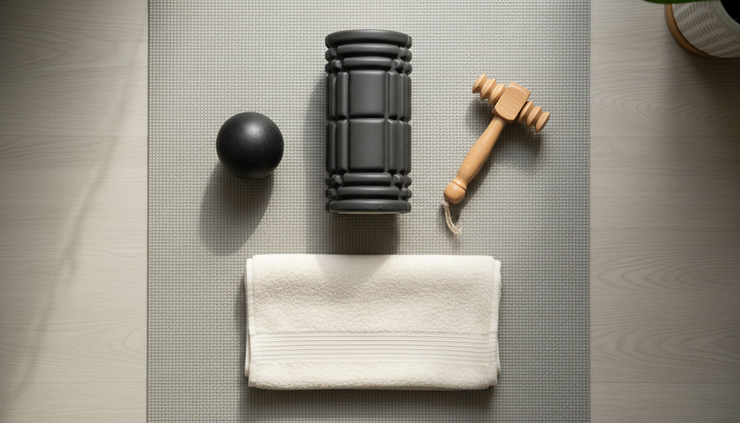
You do not need every massage tool on the market. For most people, a smart starter kit includes a medium-density foam roller, one massage ball, and either a massage stick or massage cane. Add a foot roller or percussion massager only if it fits your needs.
Start small. Use light pressure. Notice how your body responds over the next day. The goal is steady support between appointments, not doing the deepest work possible on your own.
Professional massage can do a lot, but daily habits matter too. With the right tools and a gentle approach, self-care becomes easier to repeat, and that is where the real benefit builds.


Comments